.webp) 18+
18+
18+
18+
Free demo — no real money. Loads the provider's official demo build. Demos may be unavailable in some regions.
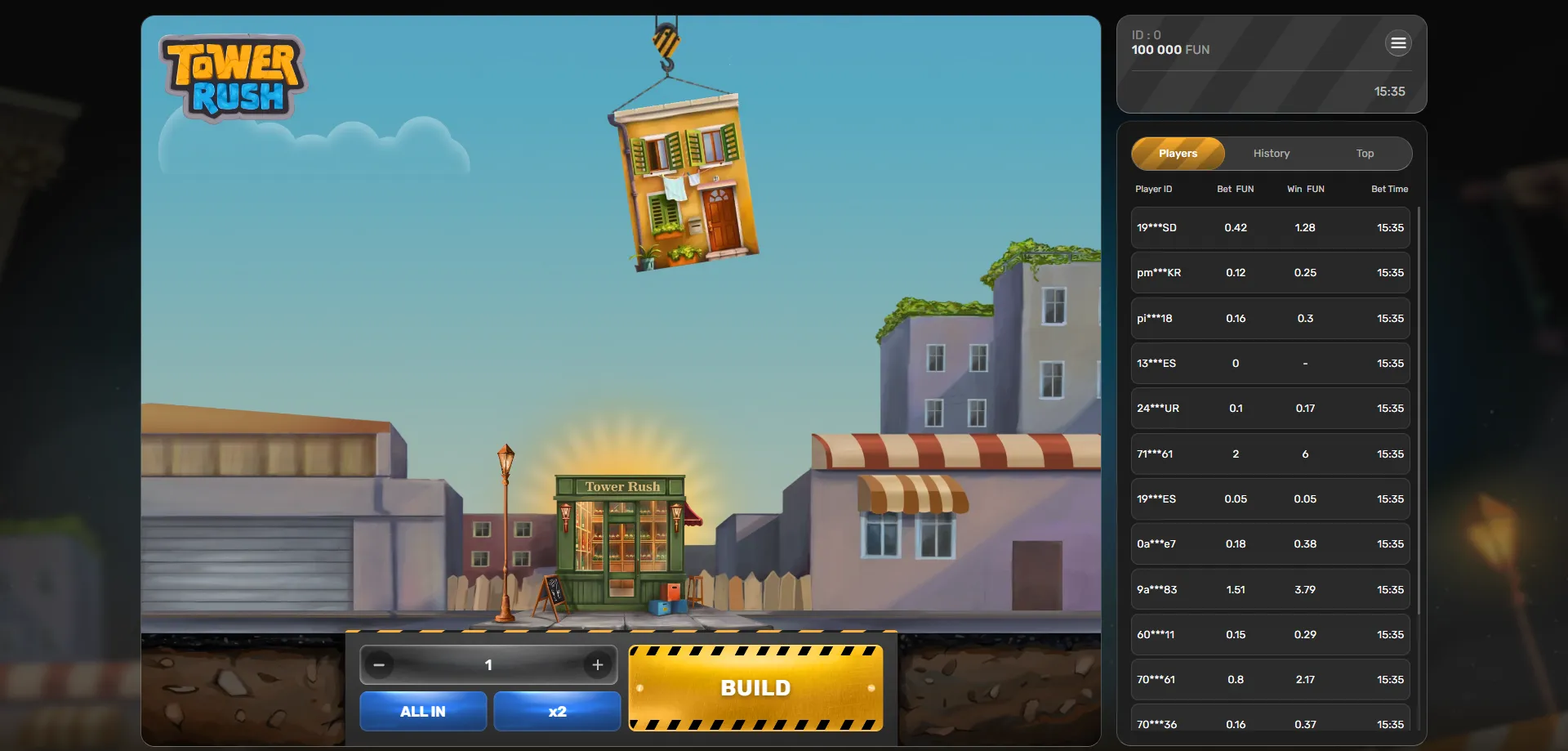
If you have never thought about strategy in a crash game before, Tower Rush by Galaxsys is the ideal place to start. The concept sounds uncomplicated on the surface — a multiplier climbs as a virtual tower builds, and you must press Cash Out before the structure collapses. But the decisions you make before and during each round determine how long your session lasts and how often you leave with a profit.
The first thing to understand is that Tower Rush operates on a certified random number generator (RNG). That means each round's crash point is determined before bets are even placed, and no pattern from previous rounds can tell you when the next tower will fall. Accepting this is the foundation of every sensible Tower Rush strategy. You are not predicting outcomes — you are managing the risk around outcomes you cannot control.
The game carries a return-to-player (RTP) of approximately 97%. RTP is a long-term statistical measure. Over millions of rounds, the game returns around ₹97 for every ₹100 wagered in aggregate. It does not mean you will recover ₹97 in a single session. Short sessions can swing sharply above or below that figure because volatility is high. Understanding this distinction keeps expectations realistic and protects you from chasing losses.
Tower Rush also features three special bonus floors — the Frozen Floor, the Temple Floor, and the Triple Build. These are triggered randomly by the RNG and cannot be bought or forced. When they appear, they alter the round's risk profile, but they do not change the fundamental principle: cash out before the collapse.
With those basics in place, every other tactical decision — stake size, cash-out threshold, session length — slots neatly into a framework you can actually apply round by round.
Bankroll management is not a glamorous topic, but it is the single most important factor separating players who enjoy Tower Rush over long sessions from those who exhaust their funds in minutes. Because the game has high volatility, early crashes can occur in rapid succession, and a poorly sized stake will wipe out a session budget before the variance has time to even out.
A widely used guideline is to limit each individual round's stake to 1%–3% of your total session budget. If you deposit ₹1,000 for a session, that puts a single-round bet between ₹10 and ₹30. At ₹10 per round — which is within the typical minimum bet range for India-compatible casinos — you can sustain at least 100 rounds before the budget is exhausted, giving variance enough time to produce winning rounds alongside the losing ones.
Indian players can fund their accounts using UPI, Paytm, Skrill, Neteller, Visa, and Mastercard, with transactions processed in Indian Rupees (INR). Using a payment method you are familiar with removes friction and lets you set a clear deposit limit before you open the game. Decide on your session budget at the deposit stage, not once you are already playing.
One practical habit: withdraw a portion of your winnings as soon as your balance grows by a defined amount — for example, 30% above your starting deposit. This locks in profit and ensures the session is not a total loss even if the remainder is lost later.
No single cash-out target works for every player or every session. The right target depends on two things: the game's statistical profile and what you personally want from the session. Matching those two factors is where Tower Rush game tricks move from theory into practice.
Tower Rush has high volatility. That means the distribution of outcomes is wide — there will be rounds that crash at 1.01× and rounds that climb past 20×, with everything in between. A low cash-out target of 1.5×–2× hits more frequently because the tower must only rise slightly before you exit. Each individual win is smaller, but the strike rate is higher, which means your bankroll erodes more slowly during a cold streak.
A high cash-out target of 5× or above produces larger wins when it connects, but the tower collapses before reaching that level far more often. You will experience longer sequences of full stake losses before a big win arrives. This approach requires a larger session budget and stronger discipline not to abandon the plan mid-session.
The Auto Cash-Out feature is your most useful tool here. Set your target multiplier before the round begins and let the game execute the exit automatically. This removes the temptation to hold on for one more floor when the tower is climbing — a decision that causes many unnecessary losses.
Ask yourself honestly why you are opening Tower Rush before you place a bet. The answer should shape the entire session plan.
The Frozen Floor bonus, when it triggers, temporarily sets a floor on the minimum multiplier for that round. It does not eliminate risk entirely, but it can make holding slightly longer a more calculated decision. Use it as a prompt to reassess your cash-out threshold for that specific round, not as a reason to abandon your pre-set plan.
Several beliefs circulate in crash-game communities that sound plausible but do not hold up against how Tower Rush actually works. Knowing what not to do is as important as knowing what to do.
Building better habits around Tower Rush protects both your budget and your enjoyment of the game. The following practices are concrete and actionable.
For a deeper look at the game's mechanics before applying these strategies, visit the Tower Rush game guide. If you want to understand exactly how the 97% RTP and high volatility interact over a longer session, the Tower Rush RTP and volatility page breaks it down in full detail.
Sign up today to claim your exclusive tower booster pack and start your journey to the peak of massive multipliers.
🎯 Play Tower Rush🔒 18+ · T&C Apply · Play Responsibly