.webp) 18+
18+
18+
18+
Free demo — no real money. Loads the provider's official demo build. Demos may be unavailable in some regions.
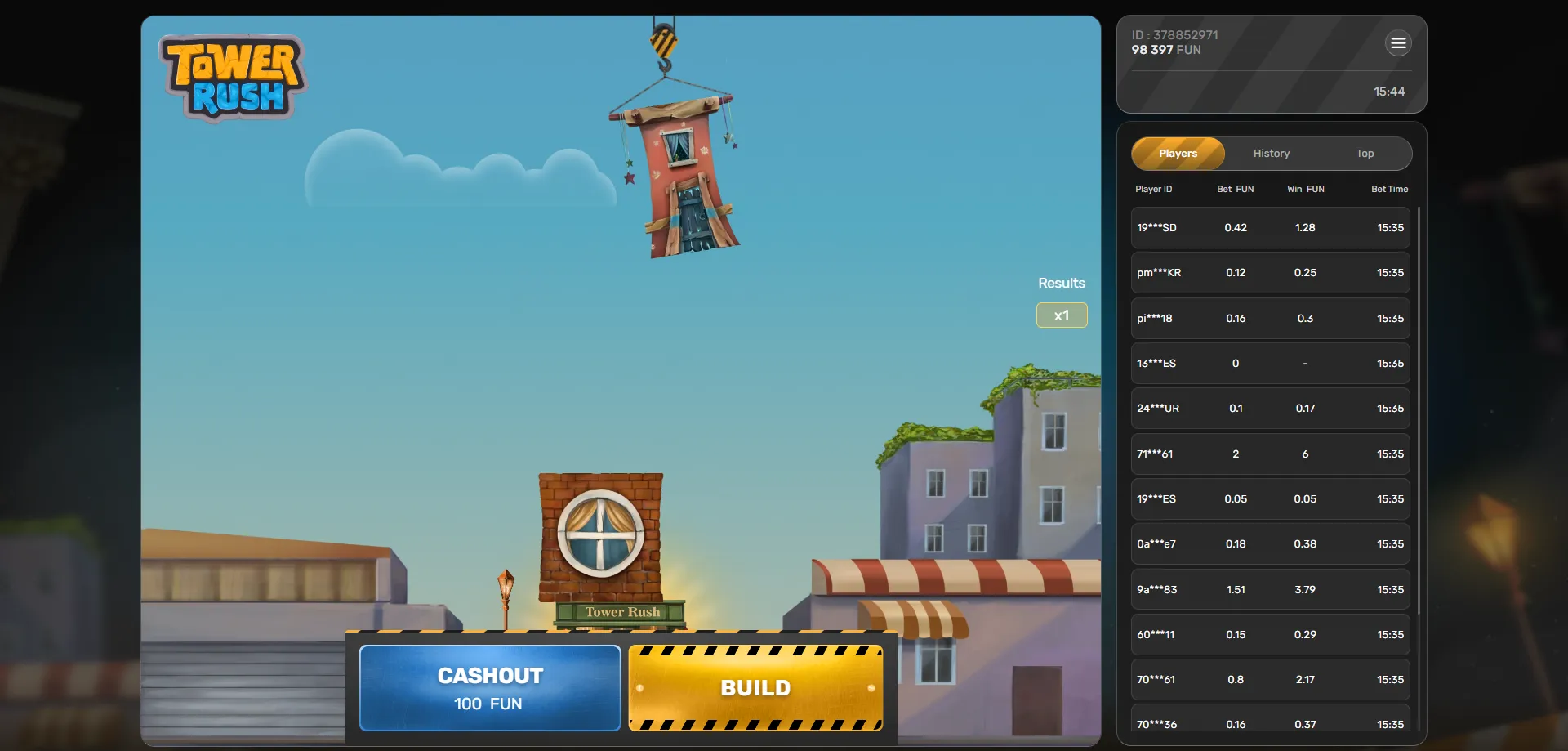
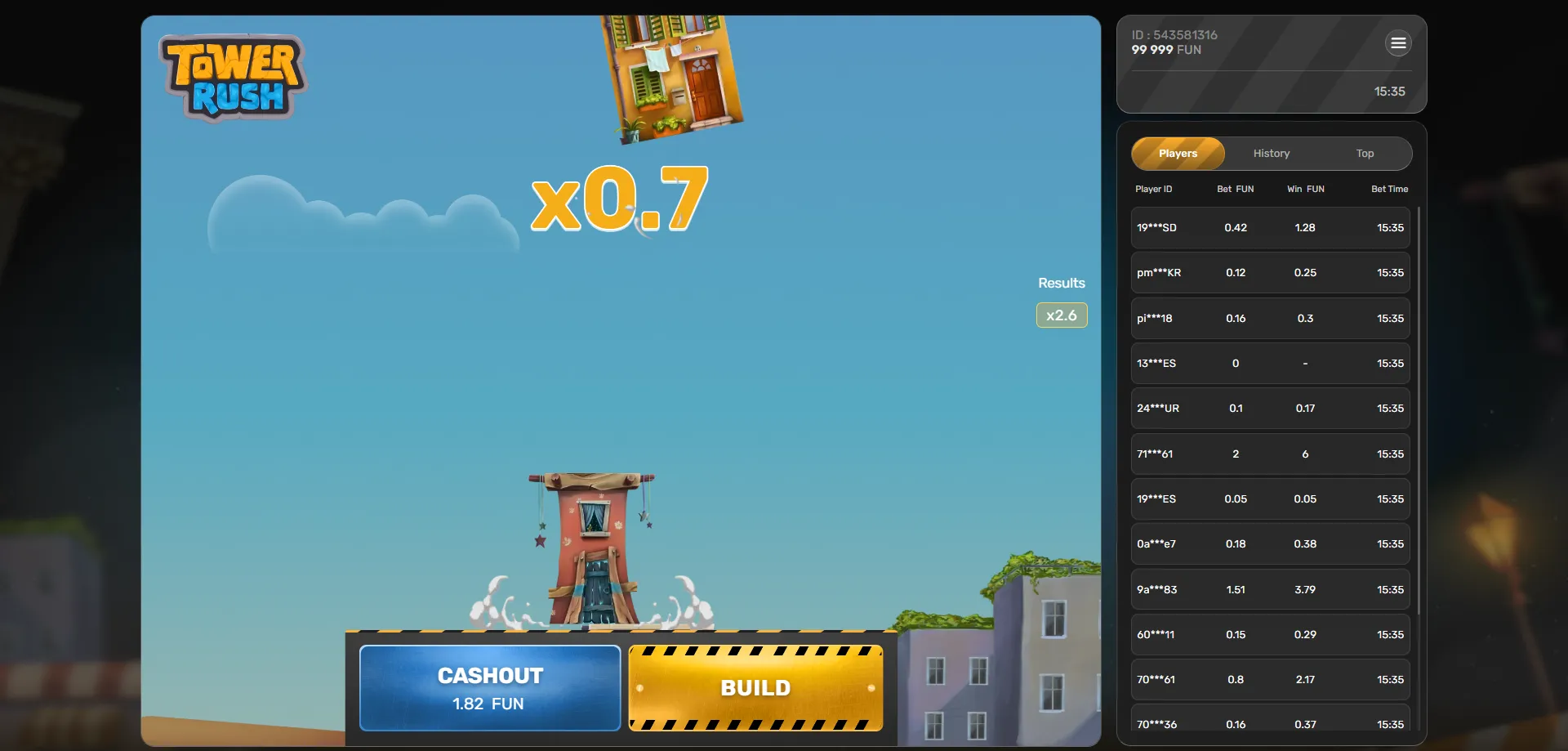
If you have already cleared your welcome bonus at Tower Rush and are now evaluating whether the platform earns a spot in your regular rotation, the first number most players reach for is RTP. The published figure for Tower Rush is approximately 97%, which sits comfortably above the 96% benchmark considered average for the broader online casino catalogue. On paper, that looks good. In practice, though, a headline RTP tells you surprisingly little about what a single session will actually feel like — and that disconnect is the source of more lost bankrolls than any other misunderstanding in casino gaming.
Two crash-format games can share a 97% RTP and yet deliver entirely different experiences. One might return small, frequent credits that keep your balance ticking over for an hour. The other could drain your stake across twenty consecutive early crashes before a single high-multiplier payout arrives to reset the ledger. The mechanism that separates them is not the return percentage — it is volatility, hit rate, and how those two forces interact with your betting style over a real session.
Volatility — also called dispersion or variance — describes how a game distributes its returns across time. Tower Rush carries a high-volatility rating, which means its payouts are concentrated rather than spread evenly. The theoretical 97% will eventually be delivered, but it arrives in clusters: extended quiet periods interrupted by high-multiplier rounds where disciplined cash-out timing turns a modest stake into a meaningful return.
For a returning player managing a weekly session budget, this matters enormously. High volatility demands a larger bankroll buffer relative to your stake size. The standard guidance — keeping individual bets to between 1% and 3% of your total session budget — exists precisely because high-volatility titles like Tower Rush can produce ten or fifteen consecutive sub-2× outcomes before a meaningful multiplier appears. A player staking 10% of their budget per round will often not survive long enough to see the distribution even out.
The most expensive myth about RTP is that it functions as a session guarantee. It does not. A 97% RTP means that across millions of rounds — the full statistical lifetime of the game — the engine returns approximately ₹97 for every ₹100 wagered. Your personal session of fifty or one hundred rounds is a tiny, statistically insignificant slice of that distribution. You can run a session at 40% return or 140% return and both outcomes are entirely consistent with a 97% RTP game.
The second myth is that a higher RTP always means more money in your pocket. A game with a 97% RTP and extreme high volatility can destroy a short session far more efficiently than a 95% RTP low-volatility title, simply because the former concentrates its returns in rare peaks. Understanding this relationship between RTP and volatility is the foundational skill for any player who wants their Tower Rush sessions to make sense week after week.
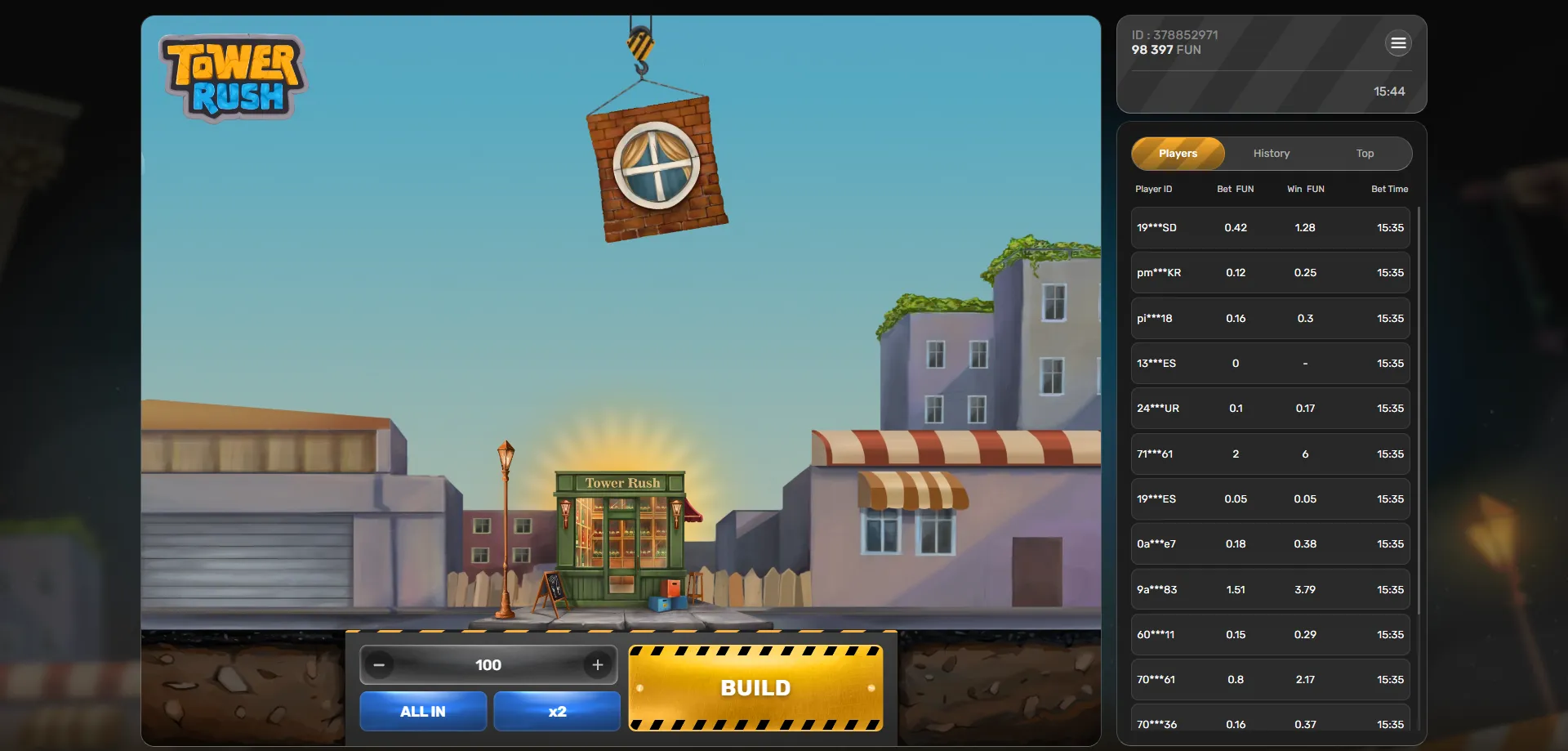
Tower Rush does not have a traditional paytable with symbol combinations and fixed odds. Its payout is determined by a single variable: the multiplier value at the exact moment you cash out, multiplied by your stake. There are no paylines to calculate and no symbol frequencies to study. What matters instead is the combination of RTP, volatility rating, and — where published — hit rate.
Hit rate measures how often a round produces a return that at least covers the player's stake. In a traditional slot context this is straightforward — a spin either wins something or it does not. In a crash-format game like Tower Rush, the equivalent question is: how often does the multiplier reach or exceed 1× before the tower collapses? Because the game pays out only when the player cashes out above their entry stake, hit rate and cash-out strategy are inseparable.
Tower Rush's high volatility implies a lower practical hit rate for players targeting multipliers above 3× or 5×. If you are consistently aiming for a 5× cash-out, you will achieve it far less frequently than a player targeting 1.5×. Both players may converge on similar returns over thousands of rounds given the shared 97% RTP — but the short-session experience is radically different. Hit rate, in this context, is less a published figure and more a function of your chosen exit strategy.
Theoretical RTP is the number Galaxsys publishes and certifiers verify: approximately 97% across an enormous sample. Real — or realised — RTP is what your account balance actually records across your personal play history. The gap between the two is entirely normal, and it narrows only as session volume increases. A player with fifty rounds of history has almost no statistical basis for comparing their real RTP to the theoretical figure. A player with five thousand rounds is starting to approach meaningful comparison territory.
One practical implication: if your Tower Rush sessions consistently feel like they are running below expectation, the cause is almost always session length and stake sizing relative to volatility — not a fault in the engine. Increasing session length while reducing individual stake size is the most reliable way to let the 97% RTP exert its statistical pull on your actual results.
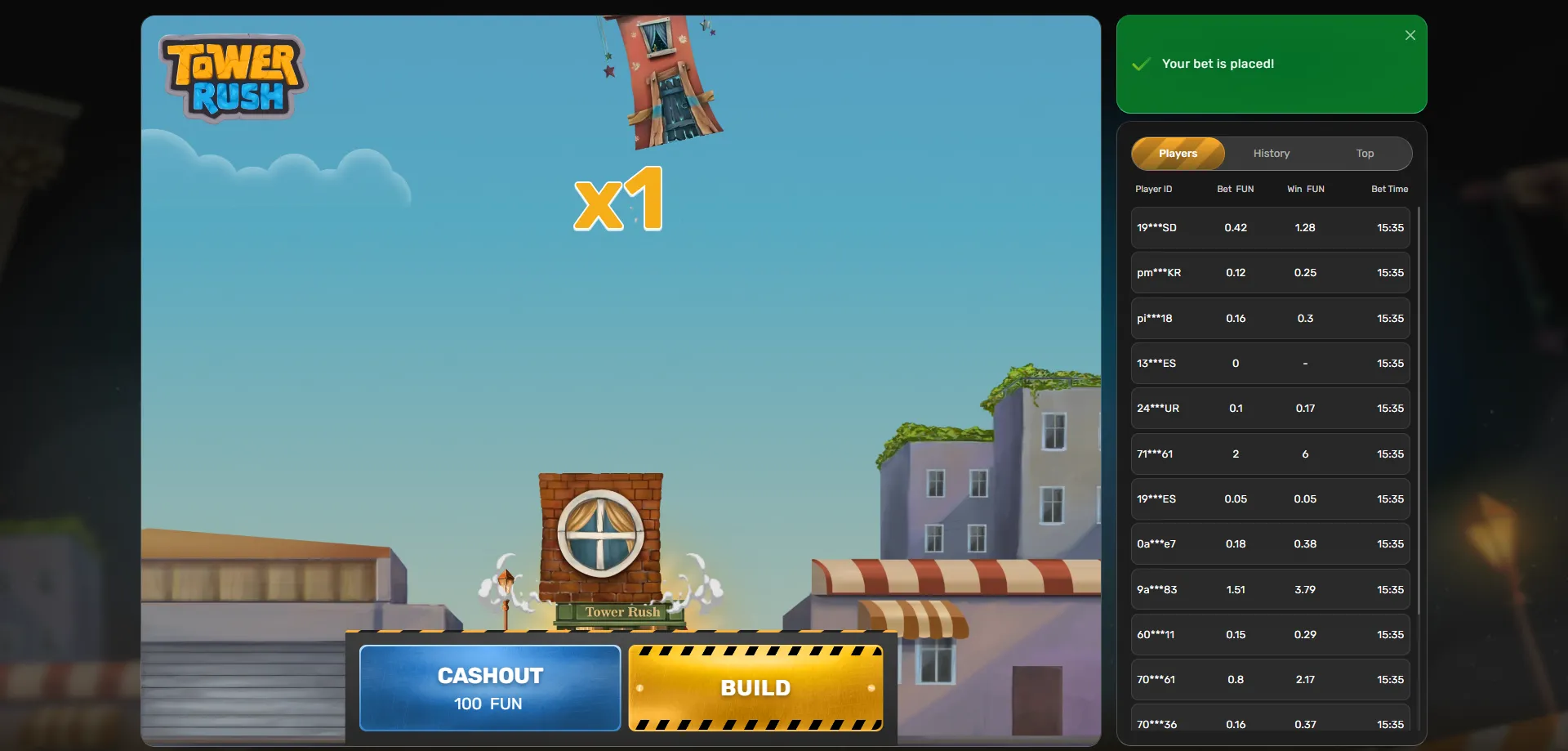
After the welcome bonus is spent, the players who get the most from Tower Rush week after week are those who have matched their betting approach to their actual risk tolerance rather than to optimism or impulse. The game accommodates multiple styles — but only if you consciously choose one.
A conservative Tower Rush player targets the 1.5×–2× multiplier band consistently. At these exit levels, the tower collapses after the cash-out far more often than it collapses before it. The payouts are small relative to stake, but they accumulate steadily and keep the bankroll alive through a full session. This approach is closest to a low-volatility experience even though the game itself is rated high volatility — the player is effectively selecting the left tail of the multiplier distribution where outcomes are densest.
This style suits players with a limited session budget who want extended play time. The trade-off is that a 1.5× cash-out returns only 50% profit on stake, so you need a meaningful number of successful exits to generate a useful session gain. The auto cash-out feature is particularly valuable here, removing the temptation to hold for a higher multiplier mid-round.
Players targeting multipliers above 5× — or the rare spectacular outcomes above 20× — are engaging with Tower Rush at its most volatile. These targets can be genuinely achievable given the game's uncapped multiplier ceiling, but they require a bankroll large enough to survive extended sequences of early collapses. The psychological discipline required is significant: watching fifteen consecutive sub-1.5× outcomes erodes confidence even when the mathematical expectation is unchanged.
If you are pursuing high-multiplier targets, sizing individual stakes at 1%–2% of your session budget is not a suggestion — it is a survival requirement. The three special bonus floor mechanics — Frozen Floor, Temple Floor, and Triple Build — trigger randomly and can support higher multiplier runs, but they cannot be anticipated or relied upon as a bankroll management strategy.
The practical middle ground for most regular Tower Rush players sits in the 2×–4× cash-out range. This band offers meaningfully larger returns than the conservative approach while avoiding the long dry spells associated with aggressive multiplier hunting. It is not a formal game mode — Tower Rush has no settable volatility — but treating this range as your target zone creates a session rhythm that resembles a medium-volatility experience in terms of win frequency and payout size.
Combining a 2×–4× auto cash-out with a consistent 2% stake-per-round rule gives most regular players a session structure they can sustain across multiple weeks without exhausting their bankroll before the RTP distribution has time to work in their favour.
Tower Rush itself occupies the high-volatility, above-average-RTP corner of the Galaxsys catalogue. Understanding where it sits relative to other game types helps regular players make informed decisions about session variety. The table below uses Tower Rush as the reference point and compares it against typical game categories available on the platform.
| Category | Typical RTP Range | Volatility | Best For |
|---|---|---|---|
| Tower Rush (Crash) | ~97% | High | Skill-influenced timing, higher bankroll |
| Low-variance slots | 95%–96.5% | Low | Extended sessions, limited budget |
| Medium-variance slots | 95.5%–97% | Medium | Balanced risk and reward profile |
| High-variance slots | 94%–96.5% | High–Very High | Jackpot hunting, large bankroll required |
If your Tower Rush sessions have been hitting a run of unfavourable outcomes, rotating to a lower-dispersion title with a comparable RTP can restore session continuity without abandoning the above-average return profile. Many Galaxsys and partner-studio titles available on Tower Rush sit in the 95.5%–96.5% range with medium volatility, offering a meaningfully smoother ride across a fifty-round session while preserving a competitive long-term return rate.
The key filter when choosing these alternatives is not just the RTP figure — it is the combination of RTP and hit frequency. A 96.5% RTP game with a high hit frequency will feel very different from a 96.5% RTP game with a low hit frequency even though the long-term mathematics are similar. Where game information pages publish hit-frequency data, treat it as at least as important as the headline RTP number.
For players who specifically enjoy the Tower Rush dynamic of risk concentration and rare large payouts, other high-volatility titles with published maximum wins of 5,000× or above represent a natural extension of the same preference. These games typically carry lower hit frequencies and require the same bankroll discipline that makes high-multiplier Tower Rush targeting viable. The key difference from Tower Rush is that traditional high-volatility slots have fixed maximum win caps, whereas Tower Rush's crash mechanics create a more open-ended ceiling, which is part of its appeal to players comfortable with timing-based decisions.
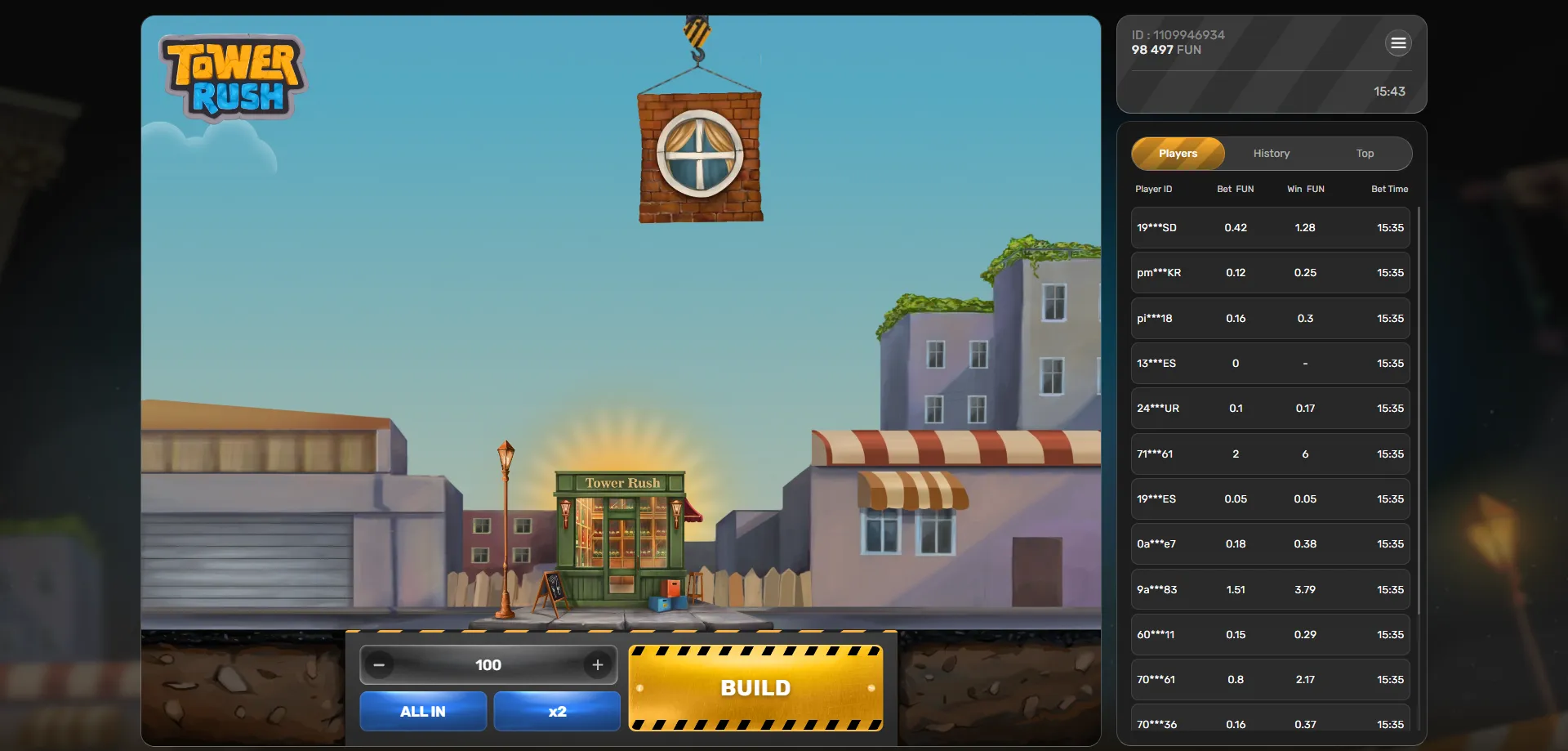
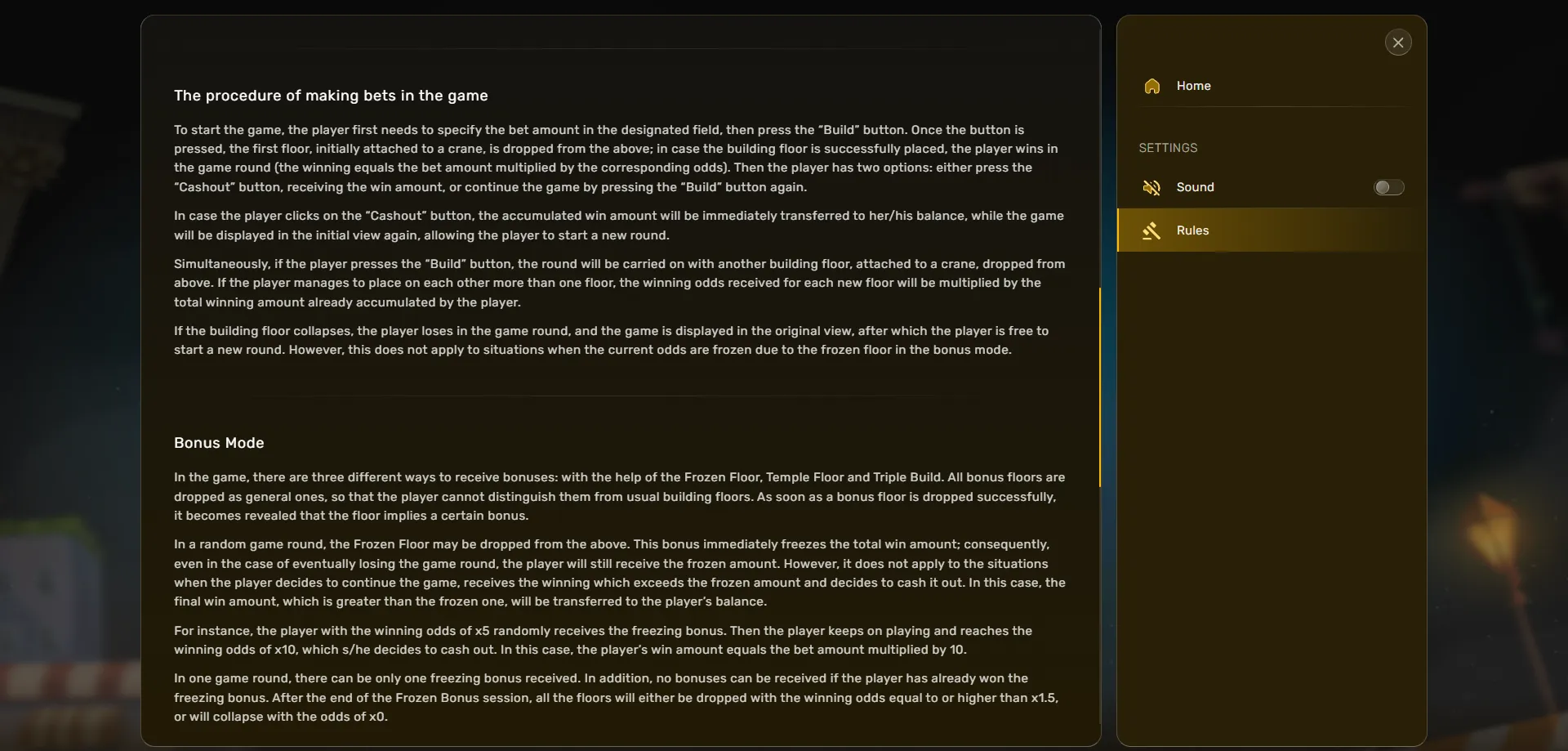
Tower Rush does not offer a bonus buy option, and its special floor mechanics — Frozen Floor, Temple Floor, and Triple Build — are triggered by the game's certified RNG without player intervention. This structure has a specific implication for bonus-funded play: the effective RTP of a Tower Rush session played with bonus credits is governed entirely by the published 97% figure and the wagering requirements attached to the promotion, not by any bonus-round frequency the player can influence.
When calculating the practical value of a reload bonus or cashback offer for Tower Rush sessions specifically, the relevant calculation is: (bonus amount × effective RTP contribution) minus (expected loss from wagering requirement). Because Tower Rush carries a high volatility rating, completing wagering requirements on this title can expose a bonus balance to significant swing risk. A thirty-five-times wagering requirement on a high-volatility crash game will see more players exhaust the bonus balance before clearing the requirement than the same requirement applied to a low-variance slot. This is worth factoring into your decision about which game to use for completing ongoing promotions each week.
The cashback and loyalty mechanics at Tower Rush generally calculate qualifying stakes at face value regardless of game type, so high-volatility play does not reduce your loyalty point accumulation. This makes Tower Rush a viable choice for loyalty point generation even during weeks when variance is running against you — the session loss feeds directly into cashback calculations, partially offsetting the statistical downswing.
Regular players who have moved past the exploration phase and want to locate specific RTP and volatility profiles quickly will find Tower Rush's catalogue filtering tools the most efficient route. The platform's game lobby supports sorting and filtering by provider, game type, and where metadata is available, by volatility band. Galaxsys titles including Tower Rush are typically tagged with their volatility classification, making it straightforward to filter for high-volatility crash games specifically.
For RTP filtering, the most reliable approach is to cross-reference the game's information page — accessible through the title's menu during demo or real-money play — with any published certification data. Galaxsys makes provably fair verification available for Tower Rush, which allows players to confirm individual round outcomes retrospectively. While this does not tell you what the next round will do, it provides a transparent audit trail that is far more useful than RTP alone for evaluating whether the game is performing within its published parameters over your session history.
If you want to go deeper into how Tower Rush actually works before focusing purely on the numbers, the Tower Rush Rules page covers the full round mechanics and cash-out system in detail. For players who want to turn their RTP knowledge into a practical betting approach, the Tower Rush Strategy guide covers bankroll sizing and auto cash-out configuration. And if you are still weighing whether the platform is worth committing to as a regular destination, the Tower Rush Review covers licensing, payment processing, and overall platform reliability.
Sign up today to claim your exclusive tower booster pack and start your journey to the peak of massive multipliers.
🎯 Play Tower Rush🔒 18+ · T&C Apply · Play Responsibly